
Reverse Engineering a Custom Radar Cover for a Honda Vehicle
At Ceyfab, we frequently work on projects that require turning incomplete data into fully functional parts. One recent project involved designing a custom radar cover for a Honda vehicle using only a partial 3D scan of the bumper area.
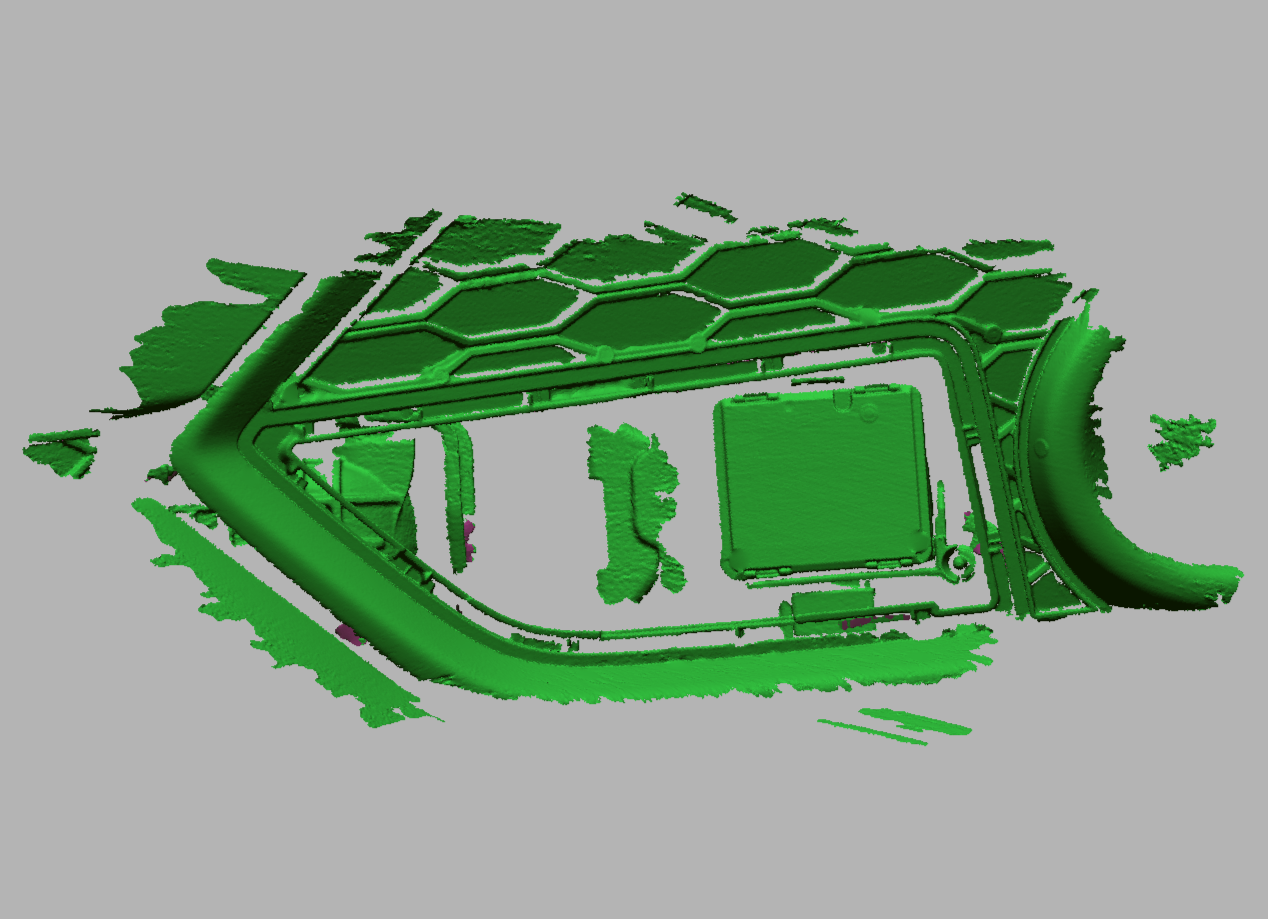
The client needed a cover to replace a missing radar module on the front bumper. The challenge was that the provided scan only contained the external geometry of the bumper opening, while the internal snap-fit mounting details were missing. This meant the part had to be designed through careful estimation, iterative prototyping, and close collaboration with the client.
The client needed a cover to replace a missing radar module on the front bumper. The challenge was that the provided scan only contained the external geometry of the bumper opening, while the internal snap-fit mounting details were missing. This meant the part had to be designed through careful estimation, iterative prototyping, and close collaboration with the client.
The cover needed to meet several design requirements:
Fit precisely into the bumper opening
Use snap-fit joints for tool-free installation
Be 3D printable in ASA for outdoor durability
Maintain reduced thickness in the radar zone to avoid signal interference
Provide a smooth exterior surface that blends with the bumper design
Since the internal mounting geometry was unavailable, I designed generic snap joints that could potentially engage with the existing bumper holes. After the first design iteration, the client performed a test print and attempted installation. Based on feedback and measurements taken during the fitting process, several refinements were made to the snap-fit geometry.
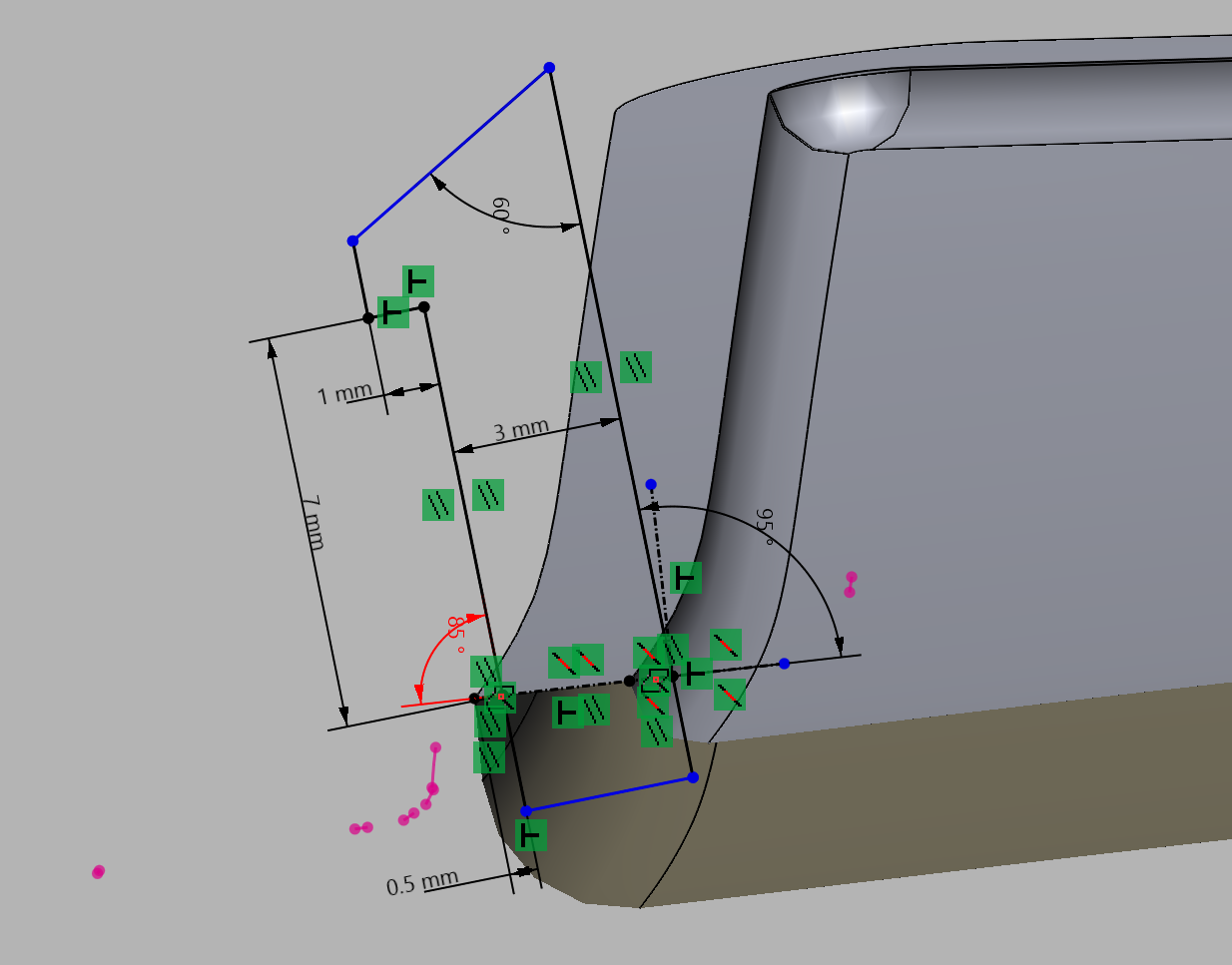
Designing accurate snap joints as per client’s description
Since the internal mounting geometry was unavailable, I designed generic snap joints that could potentially engage with the existing bumper holes. After the first design iteration, the client performed a test print and attempted installation. Based on feedback and measurements taken during the fitting process, several refinements were made to the snap-fit geometry.
These included:
Adjusting snap thickness to match the 4 mm mounting hole depth
Increasing snap engagement width to 7 mm for stronger retention
Adding a 0.5–1 mm lip coverage around the snap region
Orienting the snap angles outward so they apply pressure to the sides of the mounting holes
After a few design iterations, the final version achieved a secure and precise fit, and the printed cover installed perfectly on the vehicle. The client later confirmed that the end customer was very happy with the result.The finished part was 3D printed in ASA and installed on the car’s front bumper, successfully restoring the appearance of the vehicle while maintaining compatibility with the radar system. Projects like this highlight the value of reverse engineering, rapid prototyping, and iterative design when original CAD data or full geometry is unavailable.
If you need help recreating discontinued parts, modifying automotive components, or developing custom 3D printable designs, feel free to reach out to Ceyfab.
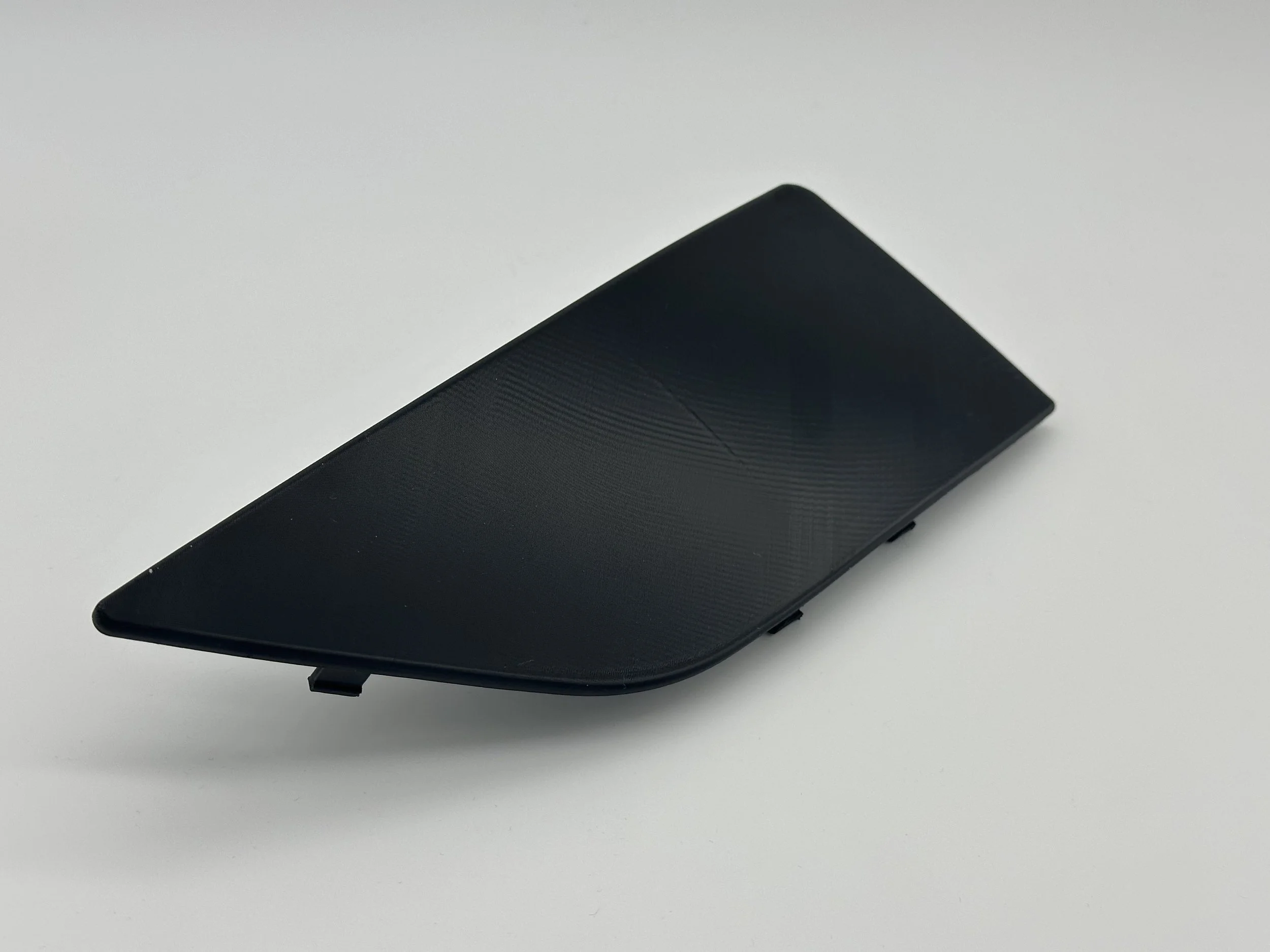
Final printed cover in ASA
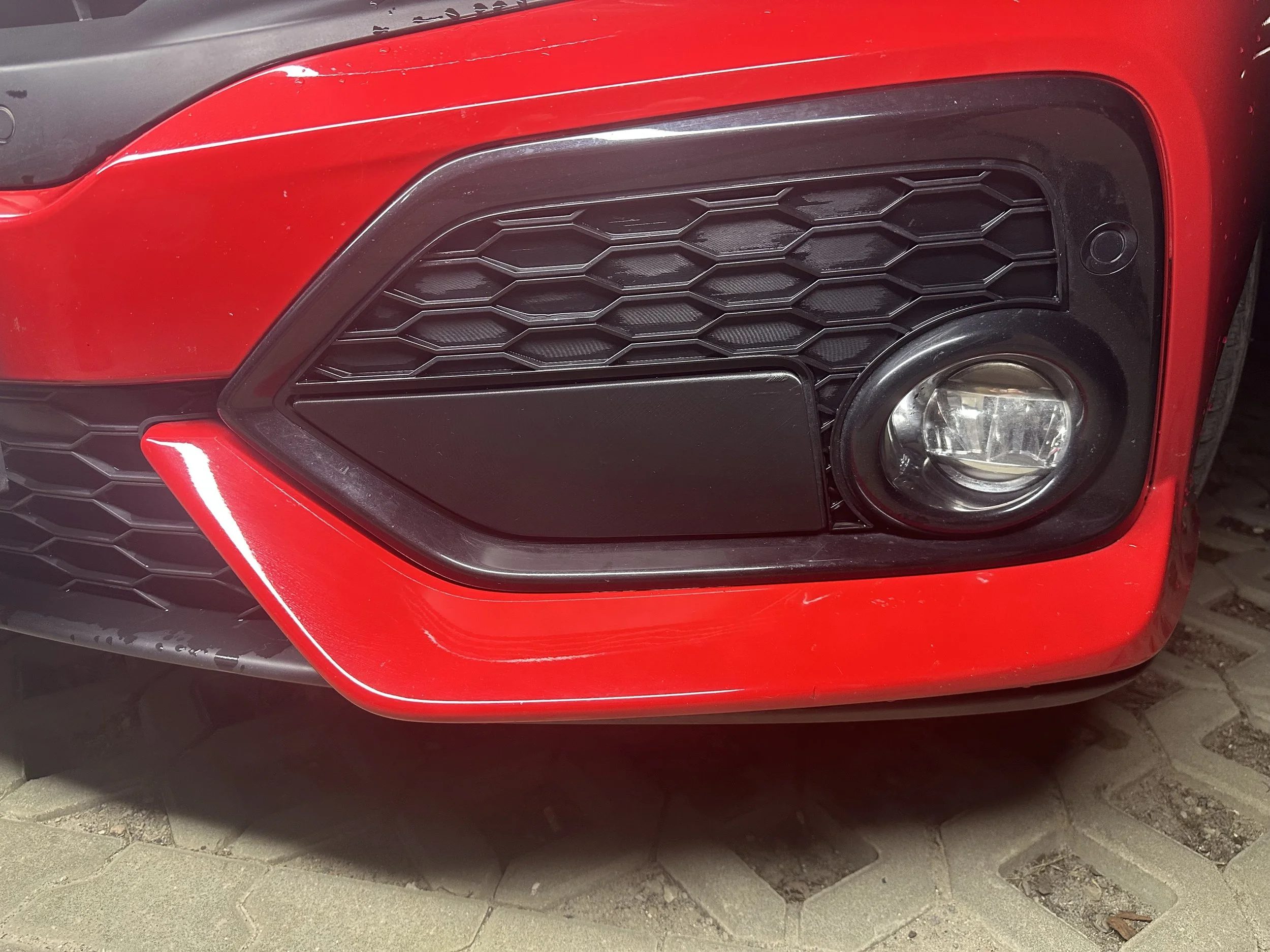
Final cover fitted onto the car
